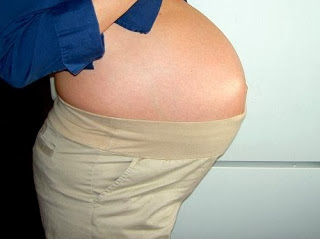
I will be 44 years old in April.
I am fifteen weeks pregnant with my seventh child...
YIKES!
My six children are 21, 18, 15, 10, 4 and 2 years old.
All of my children are happy about my pregnancy (the youngest two don't know or care).
Except the 15-year-old, who had problems with the news.
What's up with that?
TODAY'S BOOK SUGGESTION:
 |
by Nancy London
-- The first prescriptive and anecdotal guidebook for the multitudes of older moms, and distills the wisdom, insight, and practical advice gathered during her years as a therapist and support group leader.
With tips for renewing physical and sexual energy, parenting after infertility and adoption, balancing career and family, and caring for elderly parents, the personal stories from these older moms are often humorous, sometimes surprising, but always reassuring.
Without exception, the reader will be left with the comforting knowledge that she is not alone on her journey. Hot Flashes fills a much-needed place in the parenting field, at a time when more and more women are embracing motherhood later in life.
📚 Paperback: 192 pages
Click to order/for more info: Hot Flashes Warm Bottles
Just to let all you hopefuls out there that this does happen!
Women can frequently become pregnant after their 40s and 50s but can struggle to sustain their pregnancy due to lack of hormones and health-related complications, such as blood pressure problems, etc.
When there is a problem with menses, often their OB/GYN gives progesterone to promote sloughing of the lining of the uterus; this may also slough off an early embryo.
Being a nurse, I never assume anymore a woman over 50 years old isn't pregnant, as the last call I received was from a 56-year-old woman who sustained a pregnancy unassisted in any way.
She gave birth to a beautiful baby boy, with no complications at all.
She even had a natural birth, with no medical assistance!
TODAY'S BOOK SUGGESTION:
by Heather Welford
-- Explains everything the prospective parent may need to know as they face the physical, emotional and practical challenges of trying for a baby.
It covers health issues in full, from basic biology and an explanation of fertility and cycles to outlining what supplements are useful and what isn't, and how you can maximize your chances by following a healthy diet and cutting alcohol or nicotine intake.
There are plenty of resources and guidelines for parents facing difficulties, including a guide to the medical options, and advice on how to seek further help.
It will help couples to deal with the emotional issues faced when trying for a baby, and will also give practical information on who you should tell and who you must tell, and when.
With coverage of all aspects of very early pregnancy, from do-it-yourself tests to the very first scan, it will be a useful resource that will help all prospective parents, whether looking to start or to expand their family.
📚 Paperback: 192 pages
Click to order/for more info: Take Charge of Your Fertility
📚 Start reading Take Charge of Your Fertility on your Kindle in under a minute!
📚 Don't have a Kindle? Get your Kindle here, or download a FREE Kindle Reading App.
I am 44 years old and 30 weeks and 2 days pregnant with my first child, a little boy.
I will be 45 years old when he is born.
I was not my intention to do it this late, but I did not meet my husband until age 39 and we married at age 41 (he was 10 days shy of his 44th birthday).
We decided to wait a year before trying to conceive just to settle in as a married couple, get to know each other, and to save enough to get a house.
After that, we tried and were unsuccessful for 1 1/2 years. I was tested and he was tested.
My tests came back normal, but his sperm count results were slightly low.
Although he has daughter (now 20 years old) from a previous marriage, they think it was due to a large varicose vein on one of his testicles - plus the blood pressure meds he is now taking.
His doctor wanted to do surgery but we said no, and decided if God did not give us a baby of our own within the next few months then we would just adopt.
We did not want to do IVF [in vitro fertilization] since it is so costly (neither of our insurances covers it).
Plus we have moral issues with it.
In April of 2006, I discovered I was pregnant. We were overjoyed and told everyone.
Then at the end of the eighth week, I started spotting.
I ended up having a miscarriage at week nine due to a blighted ovum, which was one of the most painful things (more emotional than physical) I have ever experienced in my adult life.
The most painful was having to tell everyone since we told everyone we knew about the pregnancy.
Some were sympathetic and supportive but others said some well-meaning but insensitive things.
I was often reminded of my age and told not to get my hopes up to high.
One woman even had the audacity to say
I told you so.
I did not have a D+C and bled for 2 1/2 weeks.
After that, I went through two dry weeks and had another very strange, very heavy 3 day period.
Then in August 2006, I found out I was pregnant again.
Since I was already seven weeks along by the time I got to the OB/GYN it must have happened in July which was less than 2 months after the miscarriage.
Now we are at 7.5 months and, according to the ultrasound, the baby is perfectly good and healthy.
All other tests checked out normal also.
I would love to do a home birth but hubby is against it, so we have just finished Bradley natural birth classes, have turned in a birth plan.
If all goes well and there are no complications, we plan to do a hospital birth au natural - with no drugs.
TODAY'S BOOK SUGGESTION:
 |
| Ovulation Diet |
by Dana Tebow
-- This book is just what you need if you are having trouble getting pregnant. Dana's book provides all the well-meaning advice you could find.
But do not be fooled by the kind manner in which she presents her advice, because this book is filled with the fruitage of many months of careful research.
Dana begins with the basics of explaining what ovulation is. This is the most crucial aspect of understanding how the ovulation diet works.
Once the foundation has been laid, Dana next explains what Cervical Mucus is, and its role in helping you conceive the child you have always wanted.
Dana even explains the foods that will help you become more fertile. Best of all, she presents a few of the methods that have been tried and proven to help women get pregnant.
📚 Paperback: 24 pages
Click to order/for more info: Ovulation Diet

Women over 40 DO NOT have a higher risk for Down's Syndrome babies.
That statistic is skewed.
The risk is higher for Down's babies with a FIRST pregnancy and since in the last 20 years, a greater majority of women were choosing to put off having babies until in their 40s all of a sudden the instances of Down's babies over the age of 40 increased drastically!
But it wasn't women in general over 40 having babies... it was STILL first pregnancies with the high risk - it just so happened many more of these first pregnancies were occurring over age 40.
Thus the stats changed but were never explained accurately.
I think it is all too easy to think of 1-80 as one in 80%, but it is not.
1-80 translates to 1.25 % for DS, or 98.75% chance of not having Down Syndrome....
Maternal age as a risk factor for occurrence of Down Syndrome
Age...Stats...Percentage DS...Percentage not having Down Syndrome
36....... 1/200.......0.5% DS.............or 99.5% NOT
37........1/150.......0.666667% DS.....or 99.333333% NOT
38........1/120.......0.833333% DS....or 99.166667% NOT
39........1/100.......1% DS...................or 99% NOT
40........1/75 ........1.33333% DS........or 98.66667 % NOT
41........1/60........1.66667% DS........or 98.33333 % NOT
42........1/45........2.22222% DS.......or 97.77778 % NOT
43.........1/35 .......2.85714% DS......or 97.14286 % NOT
44.........1/30........3.33333% DS.....or 96.66667 % NOT
45+.......1/20........5% DS ...............or 95% NOT
Source: udaan.org/downsynd/downgene.htmlWhat I get from this is that the chances of having a baby with Down's Syndrome does not go up as drastically as I had originally thought.
The one in whatever numbers makes things look very bad for us.
When I translated them however to percentages, they look a lot better.
We have a better chance of having a baby without Down's Syndrome.
If I had an illness and was told I had a 95% chance of getting better, I would not plan my funeral.
Would you?
Source: Jillian | FertilityFriend.com
TODAY'S BOOK SUGGESTION:
by Kathryn Lynard Soper (Author), Martha Sears (Foreword)
-- Having a baby with Down syndrome is not something most parents would willingly choose. Yet many who travel this path discover rich, unexpected rewards along the way.
In this candid and poignant collection of personal stories, sixty-three mothers describe the gifts of respect, strength, delight, perspective, and love, which their child with Down syndrome has brought into their lives.
The contributors to this collection have diverse personalities and perspectives and draw from a wide spectrum of ethnicity, world views, and religious beliefs. Some are parenting within a traditional family structure; some are not.
Some never considered terminating their pregnancy; some struggled with the decision. Some were calm at the time of diagnosis; some were traumatized. Some write about their pregnancy and the months after giving birth; some reflect on years of experience with their child.
Their diverse experiences point to a common truth: The life of a child with Down syndrome is something to celebrate. These women have something to say--not just to other mothers but to all of us.
📚 Start reading Gifts on your Kindle in under a minute!
📚 Don't have a Kindle? Get your Kindle here, or download a FREE Kindle Reading App.

Last year I read a study that said moms who had any children after age 33 were on average, very long-lived.
Women Who Have Babies After 33 Live Longer, Study Says
...it wasn't a small difference; women who had their last child after the age of 33 doubled their chances of living to age 95 or older compared with women whose last child was born before their 30th birthday.
It made sense to me because my grandmother had three of her kids over the age of 40, and she lived till she was 97 years old.
TODAY'S BOOK SUGGESTION:
 The Long-Awaited Stork: A Guide to Parenting After Infertility
by Ellen Sarasohn Glazer
-- Parents who have wondered about the long term impact of infertility on their self-image will find the answers in this insightful book by Lois Melina, author of Raising Adopted Children and Making Sense of Adoption.
Finally, here's a book that's sensitive and responsive to the unique emotional experience of parenting after a long, arduous course of infertility diagnosis and treatment.
The Long-Awaited Stork gives you all the information, advice, and support you need to adjust to and cope with the special problems of parenting after infertility.
 Paperback: 368 pages
Click to order/for more info: The Long-Awaited Stork

On a personal level, I know for a fact my great grandmother gave birth to my grandfather when she was 43 years old.
That was back in the day when IVF [InVitro fertilization] wasn't done.
Even if IVF had been available back then, my grandmother would not have had the money to pay for it.
Also, as I stated in a different thread, my friend recently conceived her child naturally.
She gave birth when she was just shy of 44 years old.
TODAY'S BOOK SUGGESTION:
by Bettina Gordon-Wayne
-- The much-needed antidote to all the negative hype surrounding motherhood at advanced maternal age (which is 35+).
Written by seasoned journalist Bettina Gordon-Wayne—herself a first-time mom at 44 and the third generation of women in her family who did not get the memo that conceiving a baby after 40 is dangerous, if not outright impossible.
It is written from the perspective of the women who actually achieved what millions of women are striving for: naturally conceiving a healthy baby after 35 and, especially, after 40.
Maybe you are worried or are upset. Maybe you doubt that motherhood will ever happen for you. We get it. We have been there. With our stories, we want to lovingly see you through this journey as much as we can.
Paperback: 248 pagesClick to order/for more info: The Joy of Later Motherhood
Start reading The Joy of Later Motherhood on your Kindle in under a minute!Don't have a Kindle? Get your Kindle here, or download a FREE Kindle Reading App.

I am 43 years old - 44 in September this year!!
I have just found out I am now expecting my partner Brian's first child.
I have two big sproglets, Ben 21 and Amber 16 (going on 25) HeeHee.
I had to come onto this site and tell someone, cos I am gonna burst if I don't...
My wonderful partner and soul mate Brian is at work right now, and due to have the day off tomorrow.
If I can possibly hold off until then - I am planning a surprise and a half for him.
I am ecstatic and terrified at the same time.
Just as we had given up falling and I had been prodded and poked about enough!
I said to my partner... Let's call it a day honey, and just enjoy our lives.
He said that he will be happy with just us and the big ones, but will never get over the fact he hasn't been able to achieve being a father.
Well, wouldn't you just know it? Decision made, and I go and fall pregnant.
I found out 1st August and have had to keep it under wraps until Brian is off work tomorrow... My head is spinning...
TODAY'S BOOK SUGGESTION:
 You Can Get Pregnant Over 40, Naturally II: Overcoming infertility and recurrent loss in your late 30s and 40s naturally
by Sandy Robertson
-- After years of infertility and failed fertility treatments, Sandy Robertson developed an all-natural pregnancy protocol leading to the birth of her daughter at the age of 44.
In this new expanded edition, she shares her research including over 100 references.
She explains how she:
- Overcame recurrent miscarriage
- Conceived multiple times of the age of 40 with one Fallopian tube
- Balanced hormones
- Increased pelvic circulation
Paperback: 248 pagesClick to order/for more info: You Can Get Pregnant Over 40, Naturally

MOST women from about age 13 to age 52 can get pregnant after sexual intercourse.
These are called the reproductive years.
If you're sexually active, and you don't want to get pregnant, you DO have to use a reliable form of birth control.
Otherwise, you DO risk getting pregnant.
TODAY'S BOOK SUGGESTION:
 Eat, Love, Get Pregnant: A Couple's Guide To Boosting Fertility and Having A Healthy Baby
by Karen Daniels
--
A breakthrough revolutionary plan for getting pregnant fast, solving common fertility problems and having a healthy baby – this is NOT your average book on getting pregnant!
Renowned fertility expert Dr. Niels Lauersen and women's wellness expert Colette Bouchez help readers take charge of their fertility with a revolutionary new self-help plan designed to show couples how to work together to boost their conception odds, plan for a healthy pregnancy, and get pregnant faster – all without the use of expensive fertility treatments or medications.
Based on scientific research and tested on thousands of couples Eat-Love- GET PREGNANT is a simple yet revolutionary plan that provides the quintessential
missing linkabsent from most other fertility programs – namely, the importance of not only boosting both male and female fertility simultaneously, but bold new evidence showing how, when couples work together in certain special and unique ways, they can create a unified
fertility power booststrong enough to take them from infertile to fertile in as little as three months
Paperback: 116 pagesClick to order/for more info: Eat, Love, Get Pregnant
Start reading Eat, Love, Get Pregnant on your Kindle in under a minute! Don't have a Kindle? Get your Kindle here, or download a FREE Kindle Reading App.
I haven't posted in a while even though I have been lurking around every once in a while.
About eight weeks ago, I started acupuncture. I feel it's helped me a lot.
I changed how I ate based on my acupuncturist's advice, and she treated me according to where I was in my cycle.
I visit her weekly.
Anyway, the other day my best friend blurted out
I think you are pregnant!
The same night, my mom told me my son said he wanted a brother.
The next morning (yesterday), I decided to test as my temperature was still up.
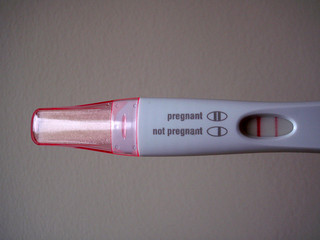
The second pink line was faint but got darker towards the three-minute mark.
I used a FRER [First Response Early Result pregnancy test].
I have an appointment to see the OB [obstetrician] this afternoon for blood work.
I am still in a fog! Think sticky bean!
Don't give up - we 40-somethings can do it!
TODAY'S BOOK SUGGESTION:
 The Secret Diary of a New Mum Aged 43 1/4
by Cari Rosen
-- Whatever your age, becoming a mum for the first time brings with it excitement, anxiety and numerous challenges.
But how do you cope when, to top it all, you discover you are old enough to be the mother of everyone else in your NCT group?
The story of one woman, one new baby, a slipped disc and rather too many wrinkles, The Secret Diary of a New Mum (Aged 43 1/4) follows the tale of a midlife mum as she tries to make the transition from experienced TV producer to utterly inexperienced parent.
One in five babies is born to a mum over 35, and the number of over 40s giving birth has doubled.
The first humorous narrative account of what it's really like to be a midlife mum - whether it's deftly side-stepping any questions about age and baby number two or weeping as younger counterparts ping back into their size ten jeans within thirty seconds of giving birth.
This is the thoroughly entertaining, insightful and often hilarious account of what happens as you face up to menopause and new motherhood at the same time.
Paperback: 256 pagesClick to order/for more info: The Secret Diary of a New Mum Aged 43 1/4
Start reading The Secret Diary of a New Mum Aged 43 1/4 on your Kindle in under a minute!Don't have a Kindle? Get your Kindle here, or download a FREE Kindle Reading App.

I became pregnant and had my first baby when I was just 19 years old. It would be several years to come before I felt ready to have another and finally, at the age of 34, I birthed a healthy baby son.
My husband and I were happy as was our 14-year-old daughter. If you do the math, our daughter has a late birthday...
I had not decided to become pregnant again, but found myself just that - only to end up miscarrying.
To my surprise, at the age of 42, found myself in an unplanned pregnancy. My doctor said it was menopause and I thought, eh, come again?
My husband and I were delighted and welcomed our surprise without hesitation in spite of the children's age differences. I delivered a healthy baby at the age of 43.
I have always had a consistently regular cycle, every 28 - 29 days apart, I know because I always mark the calendar. I did not get my period this month, so this time actually wondered if menopause had come, just like that?
I waited a few weeks and began feeling symptoms of what I thought might be pregnancy, but at my age? So, I took the test and yes, I am very much pregnant. Again, my husband is thrilled and immediately supportive.
We were not trying and I, if anyone, was completely surprised. In fact, due to my age, felt embarrassed; automatically assuming that people will make fun of, ridicule and laugh at me.
But overnight, I did a complete turnaround... I am not a religious person, so do not believe there is any god who willed this for me, helped me or even that it was my fate. Mind all, that I have many deeply religious friends; just not what I believe. So, to borrow from Brittany Spears...
Oops, I did it again!
I don't care what comes at me, I cherish life too much to abort and have set my goals, resigning myself to my own personal bliss. I will hold my aging face up high and walk with my pregnant belly and that will just be that! We already have a 9-year-old, an 18-year-old in college and a soon to be 34 years old. We're different than other families, perhaps in that respect, but not in any other way.
This is my life and I will deal with it. I am so fortunate to have such a loving and supportive hubby and we will get through this! I can turn this into positive happiness, and if I am happy, then so will be my family! :D
TODAY'S BOOK SUGGESTION:
 Is Your Body Baby-Friendly?:
Unexplained Infertility, Miscarriage and IVF Failure - Explained
by Alan E. Beer, Julia Kantecki, Jane Reed
-- A unique book—the first of its kind. No longer do patients have to accept that their infertility is
just bad luckand they just have to
keep on trying.
No longer should women with recurrent miscarriages have to listen to their doctor telling them that their loss was
God's willor that they ought to be thankful because their baby was probably chromosomally abnormal.
The statistics simply do not support such claims—in fact, they show that repeated reproductive failure can be a symptom of wider health problems in the mother.
Furthermore, the root cause can be treated—not only to promote the chances of a successful pregnancy but to improve the mother's health long-term.
Paperback: 500 pagesClick to order/for more info: Is Your Body Baby-Friendly?

My husband and I were TTC [trying to conceive] for nearly 4-1/2 yrs, but we were unsuccessful.
At ages 46 and 42 years old, we decided to apply for an adoption program within the county where we live.
Before we completed the adoption classes in March, we found out we had conceived in February.
Unfortunately, we miscarried at only five weeks along.
My OB/GYN encouraged me by saying at least we knew I had the capability to get pregnant.
My younger sister had done research on estrogen dominance, of which I had many of the symptoms.
So, after the miscarriage, I started a progesterone cream treatment, and two months later, we were pregnant!
We had a healthy, full-term pregnancy and gave birth to a beautiful little girl, just one month before I turned 43 years old.
I have been very uncertain about having another child at my age (I'm 44 years old now).
But after reading all of these wonderful and encouraging comments, maybe we will TTC this year!
Posted By Stacy Y. on 2006-08-25
TODAY'S BOOK SUGGESTION:
The Secret Diary of a New Mum Aged 43 1/4by Cari Rosen
-- Whatever your age, becoming a mum for the first time brings with it excitement, anxiety and numerous challenges.
But how do you cope when, to top it all, you discover you are old enough to be the mother of everyone else in your NCT group?
The story of one woman, one new baby, a slipped disc and rather too many wrinkles, The Secret Diary of a New Mum (Aged 43 1/4) follows the tale of a midlife mum as she tries to make the transition from experienced TV producer to utterly inexperienced parent.
One in five babies is born to a mum over 35, and the number of over 40s giving birth has doubled.
The first humorous narrative account of what it's really like to be a midlife mum - whether it's deftly side-stepping any questions about age and baby number two or weeping as younger counterparts ping back into their size ten jeans within thirty seconds of giving birth.
This is the thoroughly entertaining, insightful and often hilarious account of what happens as you face up to menopause and new motherhood at the same time.
Paperback: 256 pagesClick to order/for more info: The Secret Diary of a New Mum Aged 43 1/4
Start reading The Secret Diary of a New Mum Aged 43 1/4 on your Kindle in under a minute!Don't have a Kindle? Get your Kindle here, or download a FREE Kindle Reading App.
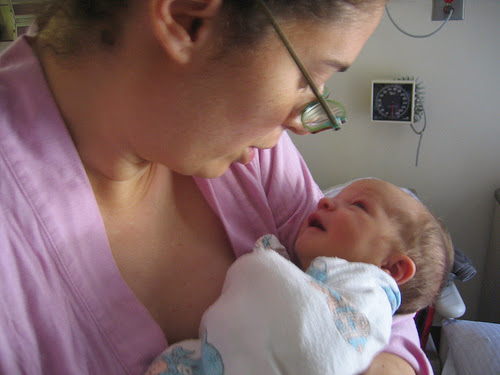
In 2005, there were more than 104,000 births in the United States to women ages 40 through 44, and over 6,500 to women 45 years old and older.
The birth rate for women in the 40-44 age group has risen steadily since 2000, by 2% annually! It rose 4% from 2015 to 2016.
The birth rate for women 45-49 years old remained unchanged from 2008 till 2012. It rose 0.8% from 2015 to 2016.
The birth rate for women aged 50 and over has remained unchanged since 2006.
Let's check the latest birth stats over 40!

Women in their 40s
—The birth rate for women aged 40–44 was 11.4 births per 1,000 women in 2016, up 4% from 2015 (11.0) (Table 2) to the highest rate for this group since 1966 (11). The number of births to women in their early 40s increased by 1% from 2015 to 2016.
The birth rate for women aged 45–49 (which includes births to women aged 50 and over) was 0.9 births per 1,000 women in 2016, up from 0.8 in 2015. The number of births to women aged 45 and over was essentially unchanged from 2015 to 2016.
Women aged 50 and over
— A total of 786 births in 2016 were to women aged 50 and over, essentially unchanged from 2015 (754) (Table 3) (10). The number of births to women in this age group has generally increased since 1997 (144) when data for women aged 50 and over became available again. The birth rate for women aged 50–54 was 0.7 births per 10,000 women in 2016, unchanged from 2015. Because of the small number of births to women in this age group, the birth rate for women aged 50–54 is expressed per 10,000 women. For rates shown elsewhere in this report, births to women aged 50 and over are included with births to women aged 45–49 when computing birth rates by age of mother (the denominator for the rate is women aged 45–49).
Source: National Vital Statistics Reports | CDC.gov
Photo credit: Births and Natality,
Births: Final Data for 2016 by CDC - All rights reserved
TODAY'S BOOK SUGGESTION:
 The Infertility Cure: The Ancient Chinese Wellness Program for Getting Pregnant and Having Healthy Babies
by Randine Lewis
-- Infertility affects one out of six couples today.
Dr. Lewis presents a groundbreaking alternative approach to infertility, explaining how she used traditional Chinese medicine to treat her own infertility, successfully conceiving and giving birth to two children.
In Lewis's experience, women who have undergone three to six months of the dietary changes, herbs and acupuncture treatments become pregnant with no further effort.
Lewis intersperses her somewhat technical examination of the program with anecdotes about her patients, weaving in discussions on diet, herbal supplements, acupuncture, older women and problems related to infertility.
Paperback: 320 pagesClick to order/for more info: The Infertility Cure

I just gave birth at 43 1/2 years old to a beautiful baby boy, who weighed in at 9 pounds 6 ounces. He has the best temperament ever!
I was asked to share my story on this page, so here it is.
I got pregnant using an ovulation monitor right away but I miscarried that baby at 9 weeks.
I decided I should go to a fertility specialist the next time, as to not waste one minute of fertility time.
Everything with these guys is about success rates.
If they think you will bring their numbers down, they don't really do too much to help you.
I was told at my age (almost 43 years old) I should adopt or use an egg donor.
I asked about medication and he said it wouldn't help me. (again protecting their success rates)
I asked for a hormone panel just to see where my fertility levels (FSH) were.
The doctor called me back very surprised and said I was still fertile.
My FSH was 6.6 and anything under 9 is considered good.
He was suspicious though and said if I came back next month and repeated the test and IF the levels were still low, he MAY consider me for a new fertility medication trial they were about to conduct.
Well, guess what? I was already pregnant, and didn't need his medication!
So my point is to hang in there, ask questions and really push those doctors to look beyond their success rates.
What I felt worked was using the ovulation monitor, but also having sex four days before ovulation as well as on the days of ovulation.
I read an article on WebMD.com saying you are actually most fertile four days before.
The other things I did were staying flat for at least 30 minutes afterward or with a pillow under your hips, cutting out anything (food wise) processed and taking my prenatal vitamins.
I also visualized me getting pregnant and the sperm connecting with the egg.
Sounds funny, but I got pregnant twice using following this advice and luckily for me, the second one took and I now have a beautiful baby boy! Good luck to all of you.
This website will help you and the support you get here is amazing. Keep trying and don't let anyone tell you it can't be done!
TODAY'S BOOK SUGGESTION:
 It Starts with the Egg:
How the Science of Egg Quality Can Help You Get Pregnant Naturally, Prevent Miscarriage, and Improve Your Odds in IVF
by Rebecca Fett
-- Whether you are trying to conceive naturally or through IVF, the quality of your eggs will have a powerful impact on how long it takes you to get pregnant and whether you face an increased risk of miscarriage.
Poor egg quality is emerging as the single most important cause of age-related infertility, recurrent miscarriage, and failed IVF cycles. It is also a major contributor to infertility in PCOS.
Based on a comprehensive investigation of a vast array of scientific research, It Starts with the Egg reveals a groundbreaking new approach for improving egg quality and fertility.
With a concrete strategy including minimizing exposure to toxins such as BPA and phthalates, choosing the right vitamins and supplements to safeguard developing eggs, and harnessing nutritional advice shown to boost IVF success rates, this book offers practical solutions to will help you get pregnant faster and deliver a healthy baby.
Paperback: 304 pagesClick to order/for more info: It Starts with the Egg
Start reading It Starts with the Egg on your Kindle in under a minute!Don't have a Kindle? Get your Kindle here, or download a FREE Kindle Reading App.

Everyone wants to talk about the twin babies Cheryl Tiegs (born Sept 25, 1947) had in 2000, and the circumstances behind the pregnancy...
But did anyone realize she had a baby with her third husband Anthony Peck? (Gregory Peck's son)....
A son named Zachary Peck born October 1, 1991, when Cheryl was 44 years old (just six days after her 44th birthday actually!)
So, she was blessed with being able to have a baby at 44 years old - naturally - some years before Donor Eggs were so available.
Photo Credit: Supermodel Cheryl Tiegs on secrets to beauty, happiness and life after modeling
All rights reserved
TODAY'S BOOK SUGGESTION:
 The Baby Business: How Money, Science, and Politics Drive the Commerce of Conception
by Debora L. Spar
-- Despite legislation that claims to prohibit it, there is a thriving market for babies spreading across the globe.
Fueled by rapid advances in reproductive medicine and the desperate desires of millions of would-be parents, the acquisition of children—whether through donated eggs, rented wombs, or cross-border adoption — has become a multi-billion dollar industry that has left science, law, ethics, and commerce deeply at odds.
In The Baby Business, Debora Spar argues that it is time to acknowledge the commercial truth about reproduction and to establish a standard that governs its transactions.
In this fascinating behind-the-scenes account, she combines pioneering research and interviews with the industry's top reproductive scientists and trailblazers to provide a first glimpse at how the industry works: who the baby-makers are, who makes money, how prices are set, and what defines the clientele.
Fascinating stories illustrate the inner workings of market segments--including stem cell research, surrogacy, egg swapping,
designer babies,adoption, and human cloning -- as Spar explores the moral and legal challenges that industry players must address.
The first purely commercial look at an industry that deals in humanity's most intimate issues, this book challenges us to consider the financial promise and ethical perils we'll face as the baby business moves inevitably forward.
Hardcover: 302 pagesClick to order/for more info: The Baby Business

First of all, one of my best friend: 43 years old (she will be 44 years old in December), with troubles of endometriosis and high FSH [follicle stimulating hormone], two failed ICSI [Intracytoplasmic sperm injection], is finally pregnant!
It is her first pregnancy, and it is completely natural - they were taking a break from medical assistance!
Everything is going well, she is now almost five months pregnant.
Yesterday she got the results of her amnio [Amniocentesis].
It's a very healthy baby boy!
TODAY'S BOOK SUGGESTION:
 The Art of Pregnancy After 40: A Personal Journey
by Katka Konecna-Rivera
-- Whether you never considered having children; or time passed while you were having too much fun or working on your career; or you haven't had luck getting pregnant for years; or had children earlier in life and then you decided to have more... you can definitely identify with this book in more ways than one.
The book shall serve as an informal guide to lifestyle, diet, exercise, partnership and pregnancy at this age, offering motivation, inspiration as well as strength.
Filled with practical advice, an inspiring journey, and a wealth of resources,
The Art of Pregnancy After 40will support, nurture, and guide you toward becoming pregnant after 40.
Paperback: 234 pagesClick to order/for more info: The Art of Pregnancy After 40
Start reading The Art of Pregnancy After 40: A Personal Journey on your Kindle in under a minute!Don't have a Kindle? Get your Kindle here, or download a FREE Kindle Reading App.
Gail asks: "Is pregnancy possible during perimenopause?"
In response to your question, you have no doubt heard of
change of lifebabies?
Where unplanned pregnancies occurred when women thought their childbearing years were over.
While statistically there is less likelihood of becoming pregnant at this time, there are many exceptions. Women at midlife are still able to conceive — whether they want to or not.
In fact, according to the National Center for Health Statistics, there were 743 births to women 50 years and over in 2014. In addition, the birth rate for women aged 45 to 49 was 0.8 births per 1,000 women. While these are small numbers, it indicates that pregnancy can happen in midlife (when many erroneously assume naturally conceived pregnancy is no longer possible.)
If you are certain you do not want to become pregnant,
you will need to continue to use birth control.
TODAY'S BOOK SUGGESTION:
The Infertility Cure: The Ancient Chinese Wellness Program for Getting Pregnant and Having Healthy Babiesby Randine Lewis
-- Infertility affects one out of six couples today.
Dr. Lewis presents a groundbreaking alternative approach to infertility, explaining how she used traditional Chinese medicine to treat her own infertility, successfully conceiving and giving birth to two children.
In Lewis's experience, women who have undergone three to six months of the dietary changes, herbs and acupuncture treatments become pregnant with no further effort.
Lewis intersperses her somewhat technical examination of the program with anecdotes about her patients, weaving in discussions on diet, herbal supplements, acupuncture, older women and problems related to infertility.
Paperback: 320 pagesClick to order/for more info: The Infertility Cure
Popular Posts
-
So, while you will not see many women in their 60s giving birth (although you may still see them adopting in more cases than you know, even ...
-
 Hi ladies, I have you all beat! I'm 48 years old with my first pregnancy, my husband is 48 years old as well. I am 14 weeks pregna...
 -
 When women are older and start skipping a few periods, it’s only natural to assume menopause is knocking on the door. Even though the ch...
 -
 Expert: Andi Cohen Subject: when does a woman’s fertility end? A woman's fertility ends when she goes into menopause and stops g...
 -
I don't believe that our eggs are old. It just doesn't make logical sense. There was an article posted a while back about how every ...
-
 Cheryl Lindsey-Seelhoff of Gentle Spirit magazine fame, had her youngest when she was 46 years old. [All things home, all things natural...


Recent Comments